Pharmaceutical cleanrooms are designed to provide highly controlled environments where medicines, vaccines, medical devices, and other healthcare products can be manufactured safely. Even the smallest contamination event can affect product quality, compromise patient safety, lead to costly product recalls, and create regulatory compliance issues. For this reason, contamination control remains one of the most critical aspects of pharmaceutical manufacturing.
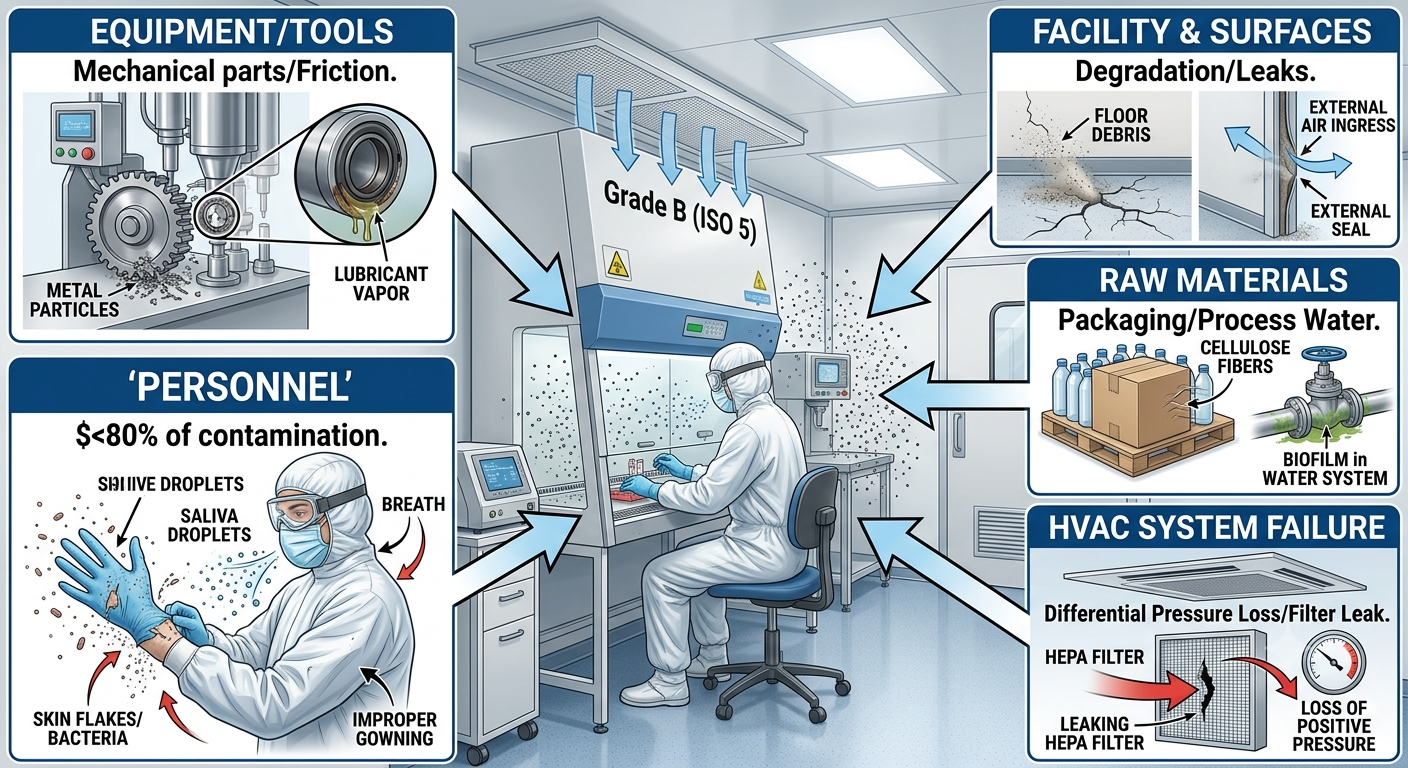
Contamination can originate from multiple sources, including personnel, equipment, raw materials, environmental conditions, and facility design. Understanding these contamination sources is the first step toward developing an effective contamination control strategy and maintaining cleanroom integrity.
Understanding Cleanroom Contamination
Contamination refers to the presence of unwanted particles, microorganisms, or foreign substances within a controlled manufacturing environment. These contaminants may be visible or microscopic and can negatively impact product quality and manufacturing processes.
In pharmaceutical facilities, contamination is commonly categorized into three groups:
- Particulate contamination
- Microbial contamination
- Cross-contamination
Each type presents unique risks and requires specific control measures to minimize its impact on manufacturing operations.
Personnel: The Largest Source of Contamination
Despite strict gowning procedures and cleanroom protocols, personnel remain one of the largest sources of contamination in pharmaceutical facilities.
Humans continuously shed skin particles, hair, and microorganisms into the surrounding environment. Simple activities such as walking, talking, or handling materials can generate thousands of airborne particles. Without proper contamination controls, these particles can enter critical manufacturing areas and affect product quality.
To reduce personnel-related contamination, pharmaceutical companies implement:
- Controlled gowning procedures
- Employee hygiene protocols
- Cleanroom behavior training
- Restricted movement within controlled zones
- Airlock and air shower systems
Regular training ensures that employees understand how their actions can influence cleanroom performance.
Airborne Particles and Environmental Factors
Airborne contamination is another major concern within pharmaceutical manufacturing facilities. Dust, pollen, fibers, microorganisms, and other particles can enter controlled environments through doors, ventilation systems, or material transfer activities.
Even when a facility appears clean, airborne particles may still be present in concentrations that exceed acceptable limits.
Environmental factors contributing to contamination include:
- Poor airflow management
- Inadequate filtration systems
- Improper pressure differentials
- Excessive personnel movement
- Uncontrolled material transfers
Maintaining consistent airflow and filtration performance is essential for controlling airborne contaminants.
Equipment and Machinery
Manufacturing equipment can become a significant contamination source if not properly maintained and cleaned.
Mechanical wear may generate particles from moving components. Inadequate cleaning procedures can leave product residues that contribute to contamination events. Improper maintenance schedules may also increase the risk of microbial growth or particulate generation.
To reduce equipment-related contamination, manufacturers should:
- Implement preventive maintenance programs
- Follow validated cleaning procedures
- Conduct regular inspections
- Monitor equipment performance
- Replace worn components promptly
Well-maintained equipment supports both product quality and regulatory compliance.
Raw Materials and Packaging Components
Raw materials entering the facility may carry dust, fibers, microorganisms, or other contaminants on their surfaces. Packaging materials and containers can also introduce unwanted particles into manufacturing areas.
Without proper cleaning and inspection procedures, these contaminants may be transferred directly into critical production environments.
Many pharmaceutical facilities utilize:
- Material airlocks
- De-dusting systems
- Air showers
- Controlled transfer procedures
- Incoming material inspection programs
These measures help reduce contamination risks before materials enter clean manufacturing zones.
Facility Design and Workflow Issues
Even the most advanced contamination control systems can be compromised by poor facility design.
Inefficient workflows, inadequate zoning, and improper material movement patterns can increase contamination risks throughout the manufacturing process. When personnel, materials, and waste streams intersect unnecessarily, contamination opportunities increase significantly.
Effective facility design typically includes:
- Segregated manufacturing zones
- Controlled personnel movement
- Dedicated material transfer pathways
- Proper room pressurization
- Strategic equipment placement
A well-designed facility creates multiple layers of contamination protection.
The Role of Air Filtration and Airflow Control
Air filtration systems play a crucial role in maintaining pharmaceutical cleanroom environments. High-efficiency filtration technologies help remove airborne particles before they reach critical manufacturing areas.
Proper airflow management helps ensure contaminants are continuously removed from controlled spaces. Consistent airflow patterns can significantly reduce contamination risks and support cleanroom performance objectives.
Many pharmaceutical facilities utilize specialized clean air solutions such as laminar airflow systems, HEPA filtration units, positive pressure modules, and contamination control equipment to maintain environmental cleanliness.
Regulatory Expectations for Contamination Control
Global regulatory agencies place significant emphasis on contamination control within pharmaceutical manufacturing.
Organizations are expected to establish documented contamination control strategies that address:
- Personnel practices
- Environmental monitoring
- Cleaning procedures
- Air quality management
- Equipment maintenance
- Material handling
Regular monitoring, validation, and risk assessments help ensure compliance with applicable quality standards and industry regulations.
Best Practices for Reducing Contamination Risks
Successful contamination control requires a combination of facility design, employee training, equipment maintenance, and environmental monitoring.
Key best practices include:
- Establishing strict gowning procedures
- Maintaining effective air filtration systems
- Monitoring environmental conditions
- Implementing preventive maintenance programs
- Training personnel regularly
- Validating cleaning procedures
- Controlling material transfers
- Conducting routine contamination risk assessments
When implemented together, these measures create a comprehensive contamination control framework.
Building a Strong Contamination Control Strategy
No pharmaceutical facility can eliminate contamination risks entirely. However, organizations can significantly reduce these risks through proactive planning, effective facility management, and continuous improvement efforts.
A successful contamination control strategy focuses on identifying potential contamination sources, implementing preventive measures, and continuously monitoring environmental performance. Facilities that invest in contamination prevention often experience improved product quality, reduced operational risks, and stronger regulatory compliance.
Conclusion
Contamination in pharmaceutical cleanrooms can originate from personnel, airborne particles, equipment, raw materials, and facility design issues. Understanding these contamination sources is essential for maintaining product quality, protecting patient safety, and meeting regulatory expectations.
By implementing robust contamination control practices, maintaining effective air filtration systems, and continuously monitoring cleanroom performance, pharmaceutical manufacturers can create safer, cleaner, and more reliable production environments.